Are Stair Lifts Safe? How They Actually Work
The machine, explained plainly — for the son or daughter who wants to understand what they're actually putting on the stairs.
(817) 789-6814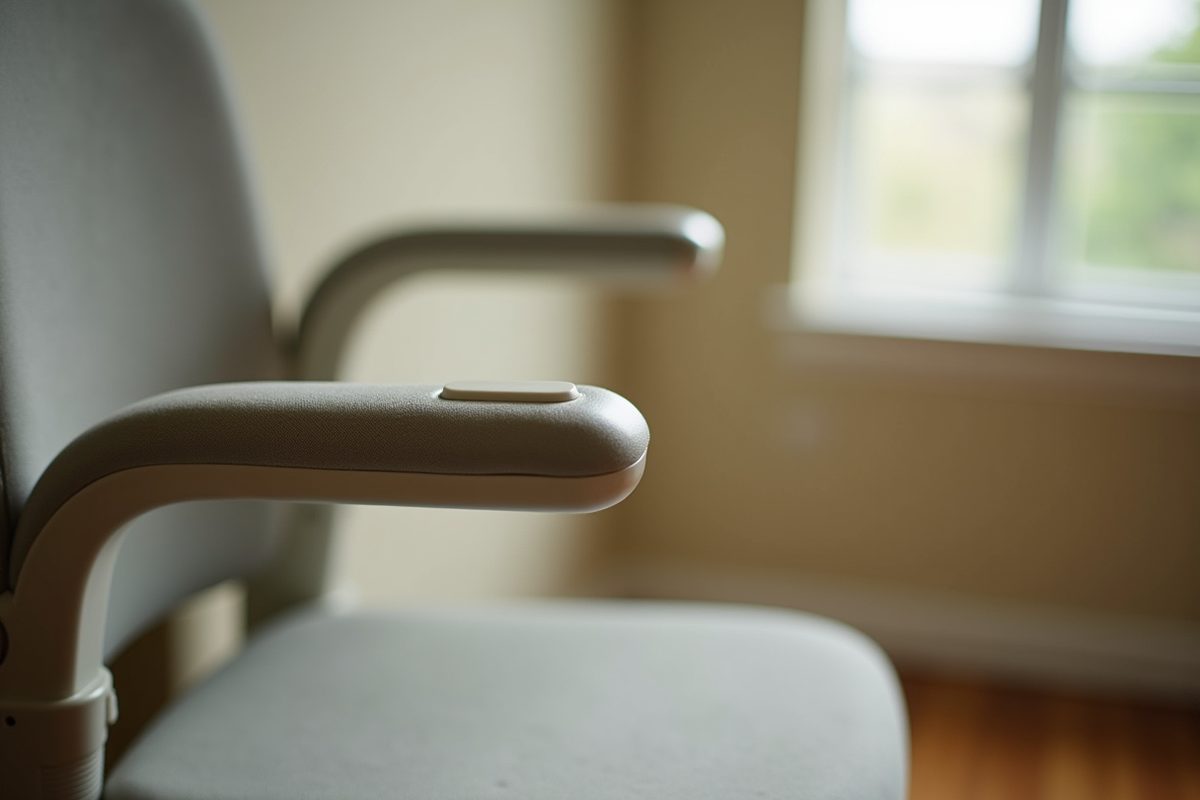
Short answer: yes — a modern stairlift, properly installed and maintained, is a thoroughly engineered piece of equipment with several independent safety features, and it works more simply than most families expect. The rail bolts to the stair treads, a battery-powered carriage rides along it at a slow, steady pace, and sensors stop it if anything is in the way. This page walks through the machine plainly — the safety features, the drive, the battery, the electric bill — so you can evaluate any lift, from anyone, with clear eyes.
How does a stair lift actually work?
Four parts do almost all the work:
- The rail — bolted to the stair treads themselves, not the wall. This surprises most families: no wall anchoring, no structural work in a typical install. (A few models and staircase shapes use additional floor or newel-post brackets; the assessment tells you which applies to yours.) Straight staircases take standardized rail cut to length; curves and landings need rail custom-bent to that staircase (the heart of the straight-vs-curved question).
- The carriage and seat — a motorized unit that climbs the rail, most commonly on a rack-and-pinion style drive: a toothed strip along the rail that the motor's gear walks up and down. Slow, steady, and geared so the carriage holds position on the slope.
- The batteries — modern lifts are battery-powered, recharging from an ordinary household outlet through charge points on the rail. The lift runs on battery even in normal use, which is also what keeps it running when the power goes out.
- The controls — a constant-pressure control on the armrest (the lift moves while you hold it, stops when you let go), plus remotes to call the lift to your floor or send it away. At the top, the seat swivels toward the landing so the rider gets off facing solid floor, not open stairs.
That's the whole machine. A rider sits, belts in, holds the control, and rides. It is deliberately boring engineering — and boring is what you want on a staircase.
What safety features do modern stairlifts have?
The features below are standard thinking across mainstream modern lifts — the exact set varies by model, so ask for the specific model's safety list in writing as part of any quote:
- Seatbelt — simple, and used every ride.
- Obstruction sensors — surfaces on the carriage and footrest that stop the lift when they meet something on the stairs (a dropped towel, a pet, a grandchild's toy) instead of pushing through it.
- Swivel seat at the landing — the seat turns so the rider boards and exits facing the landing rather than sideways over the steps; on many models the lift won't travel while the seat is swiveled. Confirm how the specific model handles this.
- Controlled speed with soft start and stop — stairlifts move at a slow walking-the-stairs pace by design; there's no lurch at either end.
- Limit switches and end stops — the lift is designed so the carriage stops itself at each end of the rail rather than running past it.
- Battery drive — no dependence on live mains power mid-ride, which is what makes the power-outage answer below possible.
- Folding out of the way — seat, arms, and footrest fold up so other people in the house use the stairs normally; a folded lift leaves walking room even on narrower staircases (widths are model-dependent — the in-home assessment measures yours).
Two honest caveats that matter more than any feature: installation quality and upkeep. A well-built lift installed badly, or a used unit sold with no inspection record, undoes the engineering. That's why certified installation is non-negotiable — for us and for anyone else you get a quote from — and why the paperwork tests in our used & reconditioned guide exist.
Do stair lifts use a lot of electricity?
No — and this is one of the most over-worried questions we hear. The lift runs on its own batteries and uses the wall outlet only to trickle-charge them. The draw is modest — small-household-electronic territory, nothing like an oven, a dryer, or an air conditioner. Exact consumption varies by model and by how many trips a day the lift makes, so we won't put a made-up number on it; the honest summary is that electricity cost should not be a factor in this decision. The one habit that matters: park the lift at a charge point and leave it plugged in. Batteries live longest when they're kept charged, and a lift parked off its charge point will eventually beep at you — that beep is a reminder, not a malfunction.
What happens when the power goes out?
Because the lift runs on batteries, a power outage doesn't have to mean a stranded lift: battery models keep working for a limited number of trips on the charge they hold. How many depends on the model and the battery's age and condition — check the documentation for the specific unit rather than trusting a generic number from the internet (including this page). When power returns, the lift recharges itself. If storms and outages are a real feature of life at your parent's house, say so during the assessment — it's a fair thing to weigh when comparing models.
What keeps a stairlift safe over time?
- Keep it charged — parked at a charge point, outlet live.
- Keep the stairs clear — the sensors will stop the lift for an obstruction, but the better outcome is the towel not being there.
- Use the belt — every ride, not just the first week.
- Periodic service — like any machine with a motor and batteries, a stairlift benefits from being looked at on a schedule, and batteries are a replaceable wear item. Ask any company quoting you — us included — what servicing looks like and what it costs, in writing.
- A real walkthrough at install — the installer should stay until your parent is genuinely comfortable operating the lift: seat, belt, controls, swivel, folding. Ours do, and you're welcome to be there in person or on the phone.
What we won't claim
A lot of stairlift marketing leans on medical-sounding promises. We don't make medical claims — about outcomes, about what a lift means for anyone's health, or about what a doctor or insurer would say. A stairlift is home equipment; whether it's the right answer for your parent's situation is a conversation for your family and their doctor. What's ours to answer — and what this page has answered plainly — is how the machine works, what it costs, and how to buy one without being taken advantage of. If coverage is the question behind the question, our financing & coverage guide gives the honest picture, including what Medicare won't do.
Questions families ask us
Are stair lifts safe?
Modern stairlifts are engineered with multiple, independent safety features: a seatbelt, sensors that stop the lift when they meet an obstruction on the stairs, a seat that swivels to let the rider get on and off at the landing rather than over the steps, controlled travel speed with soft start and stop, and limit switches that stop the carriage at each end of the rail. Proper installation and basic upkeep matter as much as the features — which is why certified installation and a real service arrangement are worth insisting on.
How does a stair lift work?
A motorized carriage with a seat travels along a rail that is bolted to the stair treads — not the wall. The rider sits, fastens the seatbelt, and holds a control on the armrest; the lift moves at a slow, steady pace and stops automatically at the end of the rail. Power comes from onboard batteries that recharge from a standard household outlet, and remotes let you call or send the lift between floors.
Do stair lifts use a lot of electricity?
No. A stairlift runs on onboard batteries and plugs into an ordinary outlet only to trickle-charge them — the draw is modest, in the territory of a small household electronic, not an appliance like an oven or a dryer. Exact consumption varies by model and by how often the lift runs, so we won't invent a number; but electricity cost is not a meaningful factor in the decision.
Does a stair lift work during a power outage?
Battery-powered models — which is most modern stairlifts — keep working through an outage for a limited number of trips on the charge they hold. How many trips depends on the model and the battery's condition, so check the documentation for the specific unit. Once power returns, the lift recharges itself from the outlet.
Why would a stair lift beep?
The most common reason is the lift telling you it isn't charging — usually because it was parked away from a charge point on the rail, or the outlet lost power. Persistent beeping or error tones beyond that are model-specific; the manual (or a service call) decodes them. A beeping lift is usually a lift asking to be parked correctly, not a lift failing.
Will a stairlift fit a narrow staircase?
Often, yes — the seat, footrest, and armrests fold up to leave walking room, and manufacturers design for tight stairwells because older homes have them. Exact minimum widths vary by model, so treat any specific number you read online as a starting point; the free in-home assessment measures your actual staircase against the actual model being proposed.
Does installing a stairlift damage the stairs?
The rail fastens into the stair treads with screws, so removal leaves fastener holes to fill — a repair, not structural damage — and because the rail doesn't attach to the wall, walls aren't touched. If the lift is ever removed, the staircase goes back to normal use with modest patching.
Next questions, in the order most families ask them: which type fits the staircase, what it costs in DFW, and whether reconditioned makes sense.
Get a Free In-Home Assessment
Tell us about your stairs and we'll follow up to schedule a no-pressure, free in-home assessment. No obligation.